Web & Digital Experiences
Website Design
Pages that tell a visitor what you do, who it is for, and what to do next.
02 / Web & Digital Experiences6 capabilities · 6 deliverables
The problem
A site that looks fine but does not explain the business
Most business websites are assembled from the inside out. The menu mirrors the org chart, the homepage opens with a mission statement, and the services are described in the vocabulary the team uses internally. A first-time visitor lands, scans for a few seconds, and cannot tell what you sell, who it is for or what happens if they get in touch.
The visual layer often makes it worse. Stock photography fills the space where proof should be, every section has the same weight, and three competing buttons ask for three different things. Nothing is technically broken, but nothing is guiding the eye either, so the design adds polish without adding clarity.
Sound familiar?
- Visitors reach the homepage and leave without opening a second page
- Sales calls start with the prospect asking what you actually do
- The menu has eight or more top-level items and no obvious primary action
- Every page ends with a generic contact form instead of a next step that fits the page
Our solution
Structure first, then visuals that support it
We start by writing the page hierarchy before drawing anything: what a visitor needs to understand in the first screen, what proof they need before they trust it, and what single action each page should lead to. Wireframes are built from that content, so the layout is a consequence of the message and not a template filled in afterwards.
Visual design then does a specific job. Typography sets the reading order, spacing groups related ideas, colour is reserved for actions and emphasis, and imagery is chosen to show the real product, people or premises. You get a design system of reusable sections, so new pages can be added later without drifting away from the original look.
Capabilities
What's inside.
- 01
Page hierarchy and content structure
We decide what each page says first, second and last, and write section headings that carry the argument on their own for readers who only scan.
- 02
Information architecture and navigation
Site maps, menu labels and page groupings are built around how customers search and decide, not around internal departments.
- 03
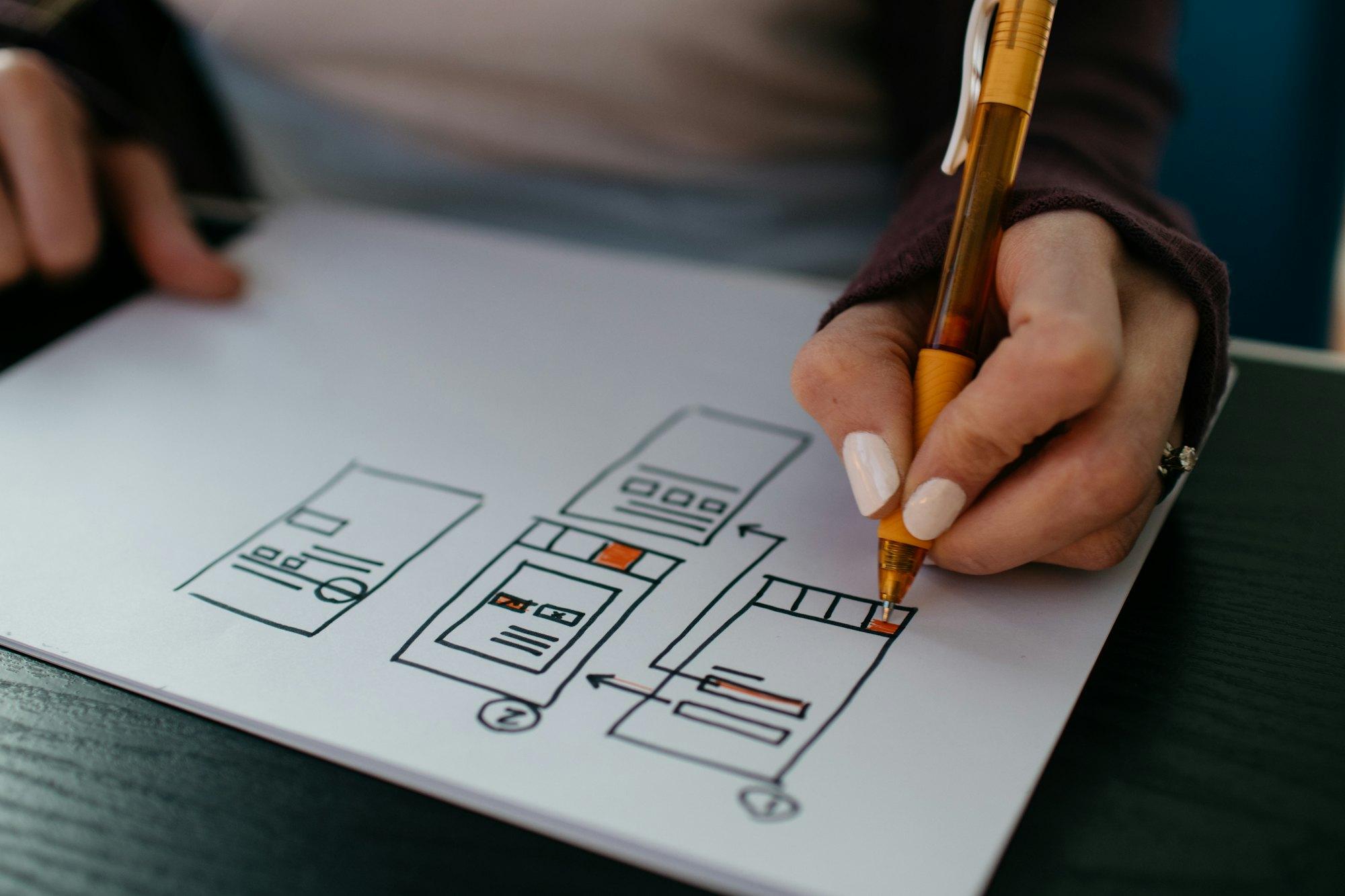
Wireframes and layout systems
Low-fidelity layouts for each page type are reviewed before visual design begins, so structural disagreements are settled while they are cheap to change.
- 04
Visual design and typography
Type scale, colour, spacing and imagery direction that match your brand and keep long pages readable on both a phone and a wide monitor.
- 05
Reusable section library
Heroes, proof blocks, feature rows, pricing layouts and calls to action are designed as components, so your team can assemble new pages consistently.
- 06
Responsive and accessible layouts
Every template is designed for small screens first and checked against WCAG contrast and focus-state basics, not retrofitted at the end.
Process
How the work unfolds.
- Step 01
Content and goals audit
We review the current site, your offers and your enquiry sources, then agree which pages exist, who each one is for and what it should achieve.
- Step 02
Structure and wireframes
Site map and page wireframes are produced with real headings and draft copy, and signed off before any visual styling is applied.
- Step 03
Visual design
Key pages are designed in full at desktop and mobile widths, with a type, colour and component system documented as we go.
- Step 04
Review and handover
We run two feedback rounds, finalise the design files and hand over a component library ready for development, ours or yours.
You receive
Deliverables
- 01Site map and navigation structure
- 02Annotated wireframes for each page type
- 03Full-fidelity desktop and mobile page designs
- 04Typography, colour and spacing guidelines
- 05Reusable section and component library
- 06Design files organised for developer handoff
Where it fits best
- HealthcareLocation pages, booking flows, reviews and patient communication, built with privacy and the plain language patients actually search in.
- EducationProgramme discovery, enquiry-to-enrolment funnels, and the CRM plumbing that stops prospective students slipping between teams.
- Professional ServicesAuthority-led content, specialism pages that rank, intake forms that qualify and CRM workflows that make referrals measurable.
- Local BusinessesGoogle Business Profile, local landing pages, review operations and a simple site that turns searches nearby into calls and visits.
FAQ
Questions we get asked.
What is the difference between website design and UI/UX design?
Website design covers how a marketing or information site looks and is organised: layout, hierarchy, copy structure and visual style. UI/UX design goes deeper into user research, task flows and the interfaces of products and apps. If you are presenting a business and its services, you need website design. If you are building something people log into and use, you need UI/UX.
Do you write the website copy?
We write headings, calls to action and the draft copy needed to make wireframes meaningful, because layout and wording cannot be separated. For long-form pages, case studies or specialist technical content we work from your material and tighten it, or bring in our content team as a separate scope.
Will I get a design I can hand to my own developer?
Yes. Design files are organised with named styles and components, spacing values and exported assets, so any competent front-end developer can build from them. We can also build the site ourselves, which usually keeps the finished result closer to the design.
Is a redesign always the right answer?
No. If the site's structure is sound and the problems are speed, tracking or weak calls to action, a full redesign is wasted money. During the audit we will tell you if targeted changes would do more than a rebuild.
- WebUI/UX DesignUser research, task flows, prototypes and interface design for web apps, dashboards and customer portals, tested with real users before development starts.View
- WebWebsite DevelopmentFront-end and back-end engineering for business websites: clean code, a CMS your team can use, solid performance and the technical SEO basics built in.View
- WebLanding Page DevelopmentFocused landing pages for ads, email and launches: one message, one action, fast load, clean tracking, and variants ready to test.View
Ready to talk about website design?
Send a few lines about what you're trying to move. We'll reply with questions, a rough shape of the work, or an honest no.
Or write to hello@asoftbit.com